


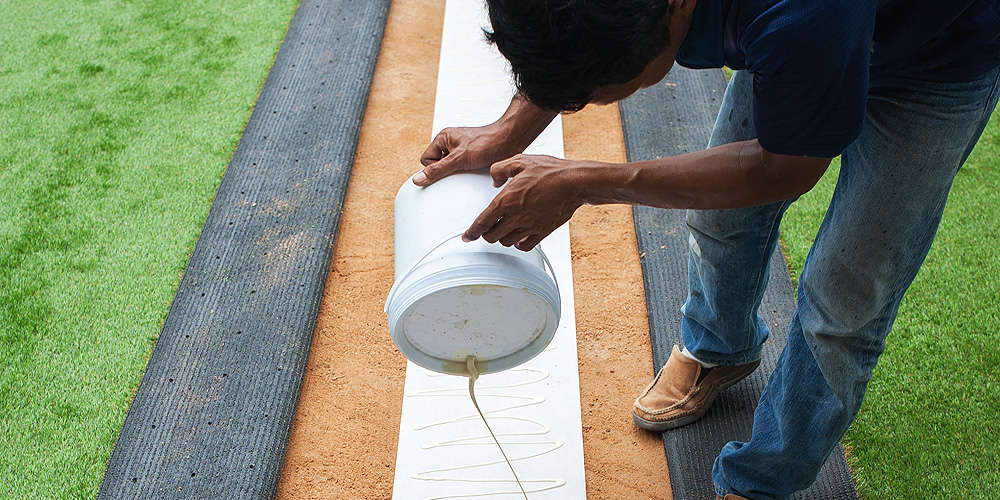
Professional Artificial Turf Installers—Why You Need to Hire One
October 10, 2016
Whether it’s your home or your business, you only get to make one first impression. Your landscaping is front and center. You are about to spend a chunk of money re-doing your front yard. You want to do your part to conserve water. But, how do you do that? You are thinking about going the “artificial turf” way. How do you find a reliable artificial turf installers? What type of faux grass should you purchase? Homeowners and commercial property owners should be vigilant in their research. You need to get references for professional artificial turf installers. You need experts to give recommendations on the best quality of faux grass for your project. Where do you find the expert help to give you that information? From your friendly local synthetic grass company Watersavers Turf. When you purchase faux grass from us, we will connect you to proven professional artificial turf installers.
Why Pick Top-Quality Synthetic Turf?
Not all synthetic turf is equal. Some companies sell low-quality synthetic turf. Serious problems can happen down the road when a low-grade fake lawn is installed. For example, in recent news, a UK company installed two defective fields for two sports teams. Both of the pitches failed the durability testing that was needed for their intended use. The cost to remove and replace the fields ran upwards of £400,000. That’s almost $530,000 US dollars!
Poor-quality fake sod will mat and flatten over time making your lawn will look like it is make out of plastic. It might even tear under normal conditions. You will be more than disappointed after investing in and installing a faulty product.
Your new manmade lawn should be a long-lasting and constant source of pride. Good quality faux turf should look like real grass. The base should be sturdy and have good drainage holes. It also should not contain any lead or other toxic products. We at Watersavers only sell the best quality synthetic turf. We also have eco-priced products to fit your budget. You can stop by any of our seven location and pick up free 1’ x 1’ samples, so you can see and feel our product. Our economy priced fake turf is just as well-made as our high-end product. Can’t stop by to pick up samples? No problem. We can deliver them to you. Just give us a call (844-874-8873).
What About the Warranty on Artificial Turf?
Ah, the warranty. It’s what allows the homeowner or business owner to sleep at night! Be sure you and your landscaper read it carefully, and understand it. In most cases, a professional landscaper must install your artificial lawn, or the warranty will be voided. A good quality home lawn properly installed should last close to 20 years with normal wear. Watersavers Turf has the only 18-year residential warranty in Northern California. We also offer a 10-year warranty for commercial property.
Not All Installers Are Created Equal
Check your professional landscaper’s reviews. Not hiring the right landscaper to install your faux sod can end up costing you double. Not many people can afford the cost of removing and reinstalling a lawn. Even fewer can afford the stress and headache of paying twice for a new yard. Remember the wise old saying, “Penny wise, pound foolish!” Don’t let that happen to you. Do your research!
Why It Pays to Use the Best in the Business
Making a bad choice for the type of turf used in your project can lead to frustration on the part of everyone in your business or your family. Picking an installer out of the hat or the phonebook can lead to increased costs to fix problems later. Buying low-quality turf can cost you more in the long run. You need to do your research and buy from a premier distributor like Watersavers Turf. We are dedicated to helping you choose the best faux grass for your project, and can help you find a qualified synthetic grass installer. Contact us online or by phone (844-974-8873) for a free estimate. You can also stop by to discuss your project with us in person at one of their seven SF Bay Area locations.

Leave a Comment